There has been a lot of debate over the U.S. border wall and its effectiveness in providing border security. Some politicians, like Rep. Alexandria Ocasio-Cortez, argue that a wall is a “moral abomination” that is “designed to separate human beings and block out people who are running away from the humanitarian disasters.” But is that true? Well, honestly, not really.
Throughout history, man has been building walls around homes, tribal groups, cities and sometimes seemingly around entire countries. As the border wall war rages on and the humanitarian crisis grows, let’s consider the effectiveness of some of the great walls of history.
- The Great Wall of China
The Chinese first started building the Great Wall in the seventh century BC, but it was expanded by the first emperor of China, Qin Shi Huang, in the second century BC. This emperor is also famous for his elaborate tomb that included thousands of terracotta warriors. While the walls Emperor Huang built are no longer around, the Chinese Empire continued to build and reinforce its border with a series of walls. The Ming Dynasty is responsible for the largest expansion and is responsible for the beautifully designed walls that we know and love today, which at one time stretched about 5,500 miles across the northern border.
In addition to providing defense against China’s aggressive Mongolian neighbors, these walls helped regulate trade, collect the duty on goods, and helped manage migration.
- Hadrian’s Wall
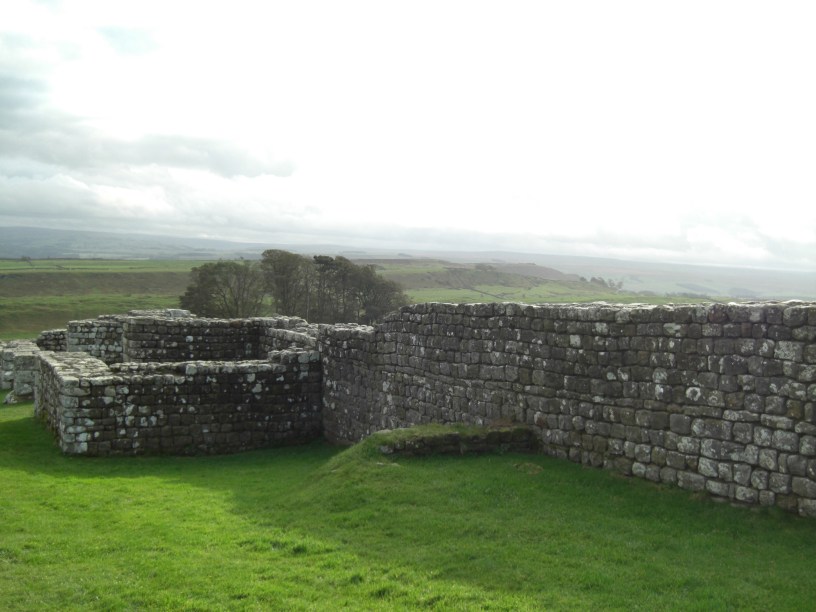
When Rome first invaded Britain, the Romans encountered fierce opposition from the local tribes and eventually constructed a long wall close to what is now the Scottish border. Spanning 73 miles with a fort about every five Roman miles, the wall was a feat of ancient engineering and remains an icon of Roman colonization to this day. Built during the reign of Emperor Hadrian, the wall was built only partly to curb the aggressive from the tribes to the north. The larger purpose of the wall was to manage immigration, smuggling and customs.
- Walls of Avila, Spain
Throughout the beginning of time, walls were an important feature of defense for all cultures and cities. One of the most beautiful examples of medieval walls is in the city of Avila in central Spain. Encompassing the entire city, there are 88 semi-circular towers that would’ve allowed the city to manage who entered and who exited. Today, the walls remain and continue to surround its citizens with a protective barrier.
- The Walls of Constantinople
Built by the Roman Emperor Constantine, the walls of the Constantinople held for more than 1,000 years. At its peak, the wall encompassed the entire city and held up against numerous armies and successive attacks looking of those looking to conquer the Roman Empire of the East. Although walls were damaged by invading armies, they were usually quickly repaired and stood tall. Eventually, the Ottomans were able to finally breach the walls after a six-week siege, which overwhelmed the cities.
- Western, Wailing Wall
A wall located within some of the most contentious real estate in the entire world, the Western Wall is all that remains of the fortifications built by Herod the Great that surrounded the city of Jerusalem. Located close to the Temple Mount, the ancient Temple of the Hebrew people, the wall is still considered the most sacred place to pray in all of Judaism. Although the fortifications were breached many times by different empires, the walls were continually rebuilt and expanded for 2,000 years in order to help rulers maintain control over the city.
Although not always effective, walls nearly always provided a good defense system, protection mechanisms, and immigration management. Walls were an essential part of maintaining control over an empire, territory or city, especially in an era where siege warfare could determine who ruled empires. If the walls did not hold, the entire city was vulnerable to an invading army that would kill, rape and steal from the people.
Walls are important. Who knew, right?
 History with Brittany