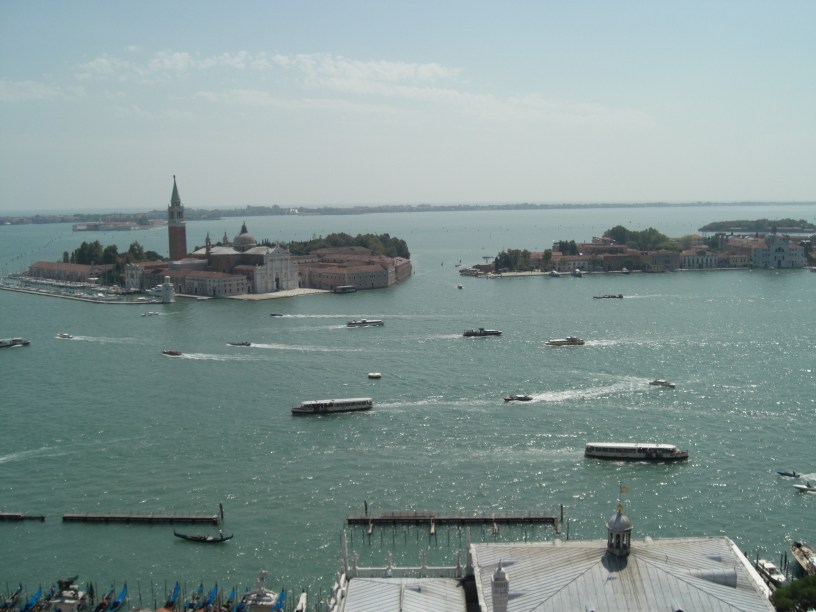
Venice is experiencing its worst flooding since 1966. The majestic city streets are now filled with water, and the crypt in St. Marks Basilica have been flooded for only the second time in history. Tourists, who expected to enjoy a serene time in one of the most beautiful cities in the world, instead found themselves slogged through knee to waist high water trying to salvage what they could of their trip.
Of course, the city’s mayor and others are blaming climate change, the vague plague that people blame for the world’s environmental problems. But is that really the issue or was the city built to sink? While there is no doubt that the ocean levels have risen, that may be the least of the city’s problems. Venice itself is sinking after all.
For years, it’s common knowledge that the city surrounded by water is sinking (shocking, I know), at the rate of about one to two mm a year. In some areas of the lagoon where the city is located, the number can be as high as five mm.
That shouldn’t be a surprise. The city was built on water, and human engineering and ingenuity doesn’t always win against mother nature. In many ways, it is amazing that the city has lasted this long.
The damage that Venice has experienced from this recent bit of flooding is likely irreversible, but was it avoidable?
I would say yes and no. Italians are aware of the problem and have tried to come up with a plan shield the city from the rising tide waters, but corruption has plagued the project for years and the project won’t be completed until 2022. If it even works.
But that doesn’t solve the fundamental problem.
Science may be able to help defend against mother nature, but it can’t always avoid the ravages of time. Is it time to admit that it might not be possible to save Venice in the long run?
Unfortunately, I think the answer is yes. There’s no doubt that every effort should be made to protect the artwork and history, but, honestly, the city just wasn’t built on the most solid ground. The people who built it had no idea its beautiful of location would become its biggest liability and perhaps even the harbinger of its demise.
When I first visited Venice in 2004, one of the things that kept coming to my mind is that the city was dying. Beyond the beautiful sights and iconic architecture, there are many areas that are filled with decay. Look at the water level and the buildings are often crumbling.
The sea is what gave Venice its power during the Middle Ages and the Renaissance, but it will also likely lead to its downfall.
This isn’t the fault of climate change, which is a moving target at best, but an inevitable outcome based on the environment where the city was built. Of course, engineers need to do what they can to minimize the impact of the tides but certain things cannot be fixed. The city should have a plan for how to protect and salvage what they can in case the worst happens.
Don’t forget, Vesuvius is still technically an active volcano. If there was a serious tsunami, the city wouldn’t stand a chance.
 History with Brittany